
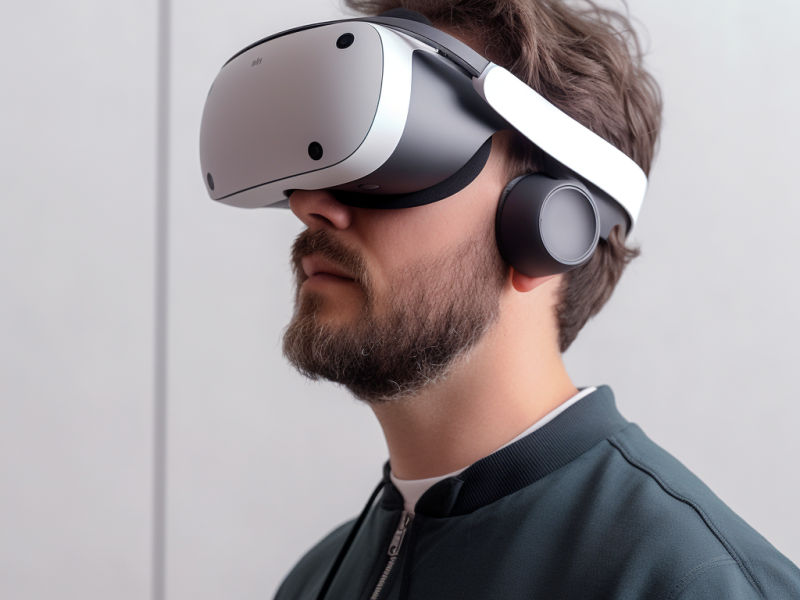
Overview of AR and VR mobile App Development
Augmented Reality (AR) and Virtual Reality (VR) are rapidly evolving technologies that have the potential to revolutionize the way we interact with digital content and the world around us. AR enhances our perception of the real world by overlaying digital information and objects onto the physical environment, while VR creates fully immersive experiences in computer-generated environments.
Mobile app development for AR and VR has gained significant traction in recent years, as smartphones and other mobile devices have become more powerful and capable of supporting these technologies. Some key areas where AR and VR mobile apps are making an impact include gaming, education, healthcare, entertainment, and industrial applications.
Augmented Reality (AR) and Virtual Reality (VR) app development relies on several key technologies that enable immersive and interactive experiences.
Examples of AR and VR
AR SDKs (Software Development Kits): AR SDKs are essential tools for developers to create AR applications. Some popular AR SDKs include ARCore by Google, ARKit by Apple, and Vuforia.
VR SDKs: Similar to AR SDKs, VR SDKs are vital for creating VR applications. Popular VR SDKs include Oculus Mobile SDK, Google VR SDK, and OpenVR SDK.
Key Technologies in AR and VR App Development
3D Engines: 3D engines allow developers to create and render complex 3D environments for AR and VR apps. Some widely used 3D engines are Unity, Unreal Engine, and Godot Engine.
Tracking and Localization:
These technologies enable AR and VR apps to recognize and track objects, surfaces, and user movements. Examples include SLAM (Simultaneous Localization and Mapping), GPS, and computer vision techniques.
User Interface and Interaction:
AR and VR apps require unique and intuitive user interfaces and interaction methods. Examples include gaze-based interaction, hand tracking, and gesture recognition.
Cloud Services:
Cloud services can be used for storing and processing data, enabling multi-user experiences, and providing real-time updates in AR and VR apps.
Key technologies in AR and VR app development play a crucial role in creating immersive and interactive experiences. These technologies include AR and VR SDKs, 3D engines, tracking and localization methods, user interface and interaction techniques, and cloud services. By leveraging these technologies, developers can create innovative and engaging applications that push the boundaries of what is possible in the AR and VR space. Need help with projects involving mobile app development.