
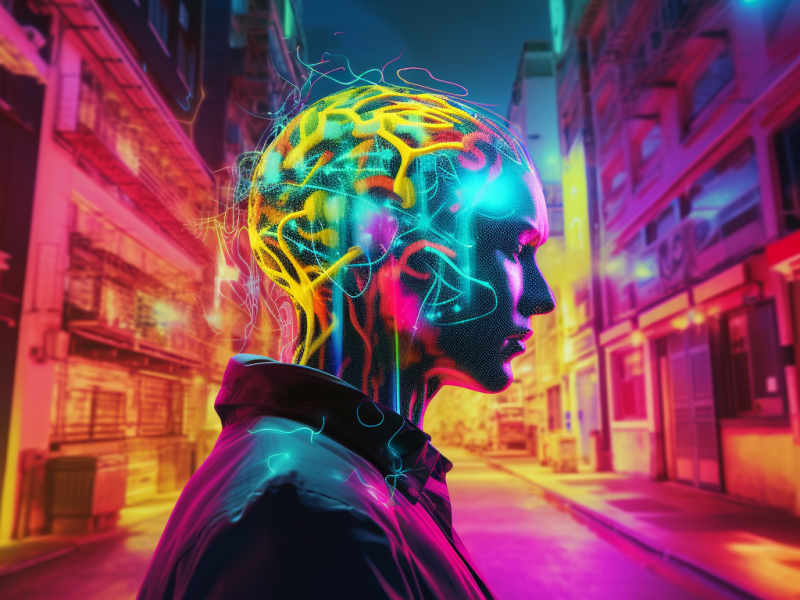
The intersection of artificial intelligence and mental health care is an exciting frontier with the potential to profoundly impact how we understand, diagnose, and treat mental health conditions. As we delve into this transformative era, let’s explore the multifaceted role of AI in this sensitive and crucial field.
The Dawn of a New Era in Mental Health
In the vast and complex world of mental health, AI emerges as a beacon of progress. With its unparalleled ability to sift through data and identify patterns, AI is offering new ways to support mental well-being. From predictive analytics that flag potential mental health issues to algorithms that tailor treatment plans, AI is not just a tool but a companion on the path to healing.
AI-Powered Support – Beyond the Traditional
Imagine a world where help is available 24/7, where support is just a message away. That’s the promise of AI applications in mental health. Virtual therapists and chatbots are stepping in to fill gaps in care, providing a listening ear and guidance when human professionals are out of reach. They’re not here to replace therapists but to ensure that everyone has access to the support they need, whenever they need it. In the landscape of mental health care, AI-powered support systems represent a paradigm shift, moving us beyond traditional, one-size-fits-all approaches. These advanced AI tools, including virtual therapists, offer a personalized and adaptive form of support that evolves with the patient’s needs. They leverage machine learning to better understand individual patterns, preferences, and responses, thereby fine-tuning their interactions for maximum efficacy. This form of support goes beyond the usual office hours, providing comfort and guidance at any hour, which is particularly vital for those who might experience mental health crises during times when traditional services are unavailable. The versatility of AI applications also extends to their ability to gather and utilize real-time data, offering insights that can lead to more effective treatments and interventions. As we continue to harness the power of AI, we see the potential for a future where mental health care is far more responsive, inclusive, and adaptive to the unique journey of each individual seeking help.
A Friend in Your Pocket – Chatbots for Companionship
Gone are the days of feeling alone in your struggles. AI chatbots are forging new paths in companionship, offering comforting conversations and crisis intervention. These digital companions are always ready to engage, helping to manage symptoms and mitigate feelings of isolation. Their constant presence is a testament to the power of technology in giving people a sense of connection, even in their darkest hours. AI chatbots are redefining the concept of companionship, offering a digital friend that resides in the comfort of one’s pocket. These chatbots provide more than just conversation; they offer a judgement-free zone for individuals to express their feelings, fears, and aspirations. Equipped with natural language processing capabilities, they can understand and respond to human emotions, offering empathetic responses and engaging in meaningful dialogue. Their presence can be particularly soothing for those who may be reluctant to seek traditional forms of therapy due to stigma or accessibility issues. By providing consistent and immediate interaction, AI chatbots are helping to alleviate loneliness and provide a sense of connectedness, reminding users that they are not alone in their mental health journey. As this technology continues to advance, these virtual companions become increasingly sophisticated, offering an ever-present source of support and a semblance of human touch in the digital age.
Navigating the Moral Maze – Ethical Challenges of AI
With great power comes great responsibility. The advent of AI in mental health care brings with it a labyrinth of ethical considerations. Privacy, consent, and the integrity of AI decision-making stand at the forefront of the debate. As we embrace this technology, we must also commit to safeguarding the rights and dignity of those seeking help, ensuring that AI serves as a force for good, not a source of new disparities. The integration of AI into mental health care ushers in a complex maze of ethical challenges that demand careful navigation. Key among these is the imperative to protect patient privacy in an age where data is an invaluable commodity. AI systems, while beneficial, must be designed with robust safeguards to prevent unauthorized access to sensitive personal information. Moreover, the algorithms that drive these systems must be scrupulously checked for biases that could skew treatment outcomes and perpetuate existing inequalities. The consent process for the use of AI technologies must be transparent, ensuring that patients are fully aware of how their data will be used. Additionally, the potential for AI to influence clinical decisions prompts a reevaluation of accountability in mental health care, raising questions about the balance of power between human judgment and machine recommendations. As AI continues to make inroads into this field, the medical community, ethicists, and society at large must engage in an ongoing dialogue to ensure that these technologies are employed in a manner that respects individual rights and upholds the highest ethical standards.
The Horizon of Hope – What Lies Ahead
As we gaze into the horizon of hope that AI and mental health care present, we are witnessing the dawn of an era where personalized care becomes the norm rather than the exception. Current research is fervently exploring ways to fine-tune AI algorithms for more accurate diagnosis, more effective interventions, and improved patient outcomes. The potential of AI to transform vast datasets into actionable insights promises to revolutionize early detection and preventive care. Looking ahead, we anticipate a future where AI not only augments the therapist’s role but also empowers patients with tools for self-management and resilience-building. The collaborative synergy between human expertise and artificial intelligence holds the key to unlocking breakthroughs that could reshape mental health care, making it more accessible, effective, and attuned to the diverse tapestry of human experiences.
The convergence of AI and mental health care heralds a transformative shift towards a more accessible, personalized, and responsive healthcare landscape. As we navigate the ethical intricacies and embrace the technological advancements, we stand on the precipice of a future where mental health support is not constrained by time, location, or resource availability. The promise of AI in mental health is not just in its cutting-edge applications but also in its potential to destigmatize mental health issues and democratize access to care. Embracing AI’s capabilities while safeguarding ethical principles will be crucial in realizing a vision where mental well-being is a universally attainable goal. As we continue to innovate and research, the horizon brims with optimism, offering a beacon of hope for individuals around the world in pursuit of mental health and happiness.
At Embracing the Future, we believe in the synergy of technology and human empathy. We’re excited to journey with you towards a brighter, AI-empowered future in mental health care. Don’t hesitate to get in touch – together, we can make a difference. Contact us now.