
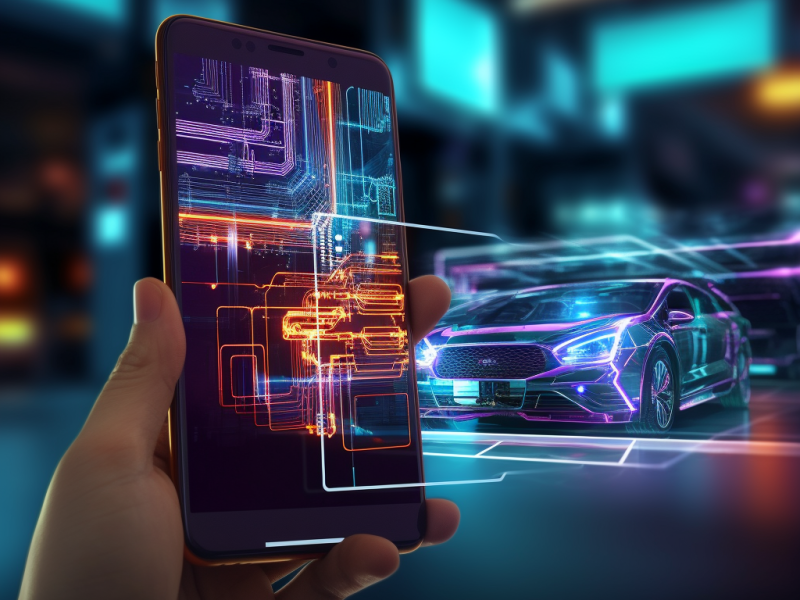
The realm of mobile technology is undergoing a transformative phase, marked by the rapid evolution of hardware capabilities. This metamorphosis is not just enhancing the performance of smartphones but is also unlocking the potential for immersive augmented reality (AR) experiences. This blog post delves into the core advancements in mobile hardware and their profound impact on AR applications, providing insights into the future trajectory of mobile computing.
The Evolution of Mobile Hardware
The march of progress in mobile hardware is a testament to the relentless pursuit of technological excellence. In the past decade, we’ve witnessed a monumental shift in the capabilities of mobile devices, a shift that has redefined the very essence of what smartphones can achieve. Gone are the days of simple text messaging and voice calls; today’s devices are multifaceted powerhouses capable of complex tasks that were once the exclusive domain of desktop computers. This evolution is characterized by several key developments: the relentless scaling down of chip architectures, enabling more transistors to be packed into the same space; the integration of advanced features like biometric authentication and wireless charging; and the adoption of new materials and design paradigms that enhance durability while maintaining sleek form factors. As each generation of mobile hardware unfolds, it brings with it a surge in processing power, energy efficiency, and connectivity options, laying the groundwork for a future where the distinction between a computer and a mobile device is increasingly blurred. The implications of this evolution are far-reaching, setting the stage for innovations in fields ranging from telecommunications to healthcare, and igniting the engines of change that will drive us towards an interconnected and intelligent world. The augmented reality ecosystem, powered by mobile AR technology, continues to expand as these advancements pave the way for new AR experiences and applications in our everyday life.
The Powerhouse Behind Innovation – Mobile Processors
Mobile processors are the beating heart of our devices, the silent workhorses that dictate the pace at which our digital lives unfold. The transformation of these processors over recent years has been nothing short of revolutionary. With each new iteration, they grow more adept at juggling multiple tasks, more attuned to the nuances of artificial intelligence, and more harmonious in their balance of power and efficiency. Advances in semiconductor technology have allowed for a dramatic increase in processing power even as the physical size of chips shrinks, enabling smartphones to host desktop-class CPUs. This has opened the door to on-device machine learning capabilities, real-time language translation, and console-quality gaming on the go, all while maintaining battery life that can sustain the demands of modern usage. As mobile processors evolve, they not only redefine the limits of what our devices can do but also how we interact with technology, making experiences more intuitive, more responsive, and ultimately, more human. The future of mobile processing promises even greater integration of AI and energy-saving technologies, heralding a new era of smart, ultra-efficient devices that will further blur the lines between mobile and traditional computing. Mobile AR apps, in particular, benefit from these high-powered processors, enabling seamless AR experiences that integrate with the user’s surroundings.
Pioneering Visuals – The Advancement of Mobile Graphics
The graphics capabilities within our mobile devices have advanced at a breathtaking pace, propelling us into an age where the visuals displayed on our handheld screens are as rich and detailed as those on high-end monitors. This leap forward is a culmination of relentless innovation in mobile GPU architecture, which now supports complex lighting effects, realistic textures, and fluid animations that were once the exclusive purview of dedicated gaming consoles and PCs. Enhanced graphics not only augment the aesthetic appeal of mobile interfaces but also expand the horizons of mobile gaming and content consumption, offering an immersive experience that captivates users. With the integration of technologies like ray tracing and high dynamic range (HDR) imaging, mobile graphics are achieving a level of realism that enhances storytelling and gameplay, making each session more engaging and lifelike. The advancement of mobile graphics is also a cornerstone for emerging technologies such as virtual and augmented reality, where the visual fidelity of the experience is paramount. As GPUs continue to evolve, they will unlock new possibilities for content creators and consumers alike, shaping the way we perceive and interact with the digital world through the window of our mobile screens. AR glasses, which rely heavily on the power of mobile graphics, are becoming more accessible and offer a unique way to experience AR technology.
Sensing the World – The Role of Specialized Sensors in Smartphones
Smartphones have become sensory extensions of ourselves, equipped with an array of specialized sensors that capture and interpret the world around us in intricate detail. These sensors—accelerometers, gyroscopes, proximity sensors, ambient light sensors, and more—serve as the nexus between the physical world and the digital realm, enabling our devices to respond intelligently to our environment. They facilitate a myriad of functionalities, from the simplicity of auto-rotating screens to the complexity of health monitoring systems that track heart rates and count steps. The development of these sensors has been pivotal in the rise of context-aware computing, where devices anticipate and adapt to user needs in real-time. With each leap in sensor accuracy and efficiency, smartphones are becoming more adept at understanding user intent, providing personalized experiences, and enhancing user engagement. For example, the integration of advanced camera sensors has revolutionized photography, allowing for features like depth-sensing and low-light enhancement that rival professional cameras. As sensor technology continues to evolve, it promises to further bridge the gap between humans and machines, enabling more natural interactions and paving the way for the next generation of smart, perceptive applications that will redefine our interaction with technology. The real-world environment is now a canvas for mobile AR, where users can experience AR apps that interact with the physical world around them.
The Ripple Effect on Mobile Applications
The rapid evolution of mobile hardware is not occurring in isolation; it is sending shockwaves through the ecosystem of mobile applications, reshaping the boundaries of what is possible on a handheld device. As hardware capabilities expand, so too does the canvas upon which developers can craft their digital masterpieces. High-performance processors, sophisticated graphics, and advanced sensors are empowering app developers to push the envelope, creating applications that are richer, more dynamic, and more demanding than ever before. This is not merely a quantitative change but a qualitative transformation that is fostering a new breed of mobile applications. These apps leverage the latest hardware innovations to deliver experiences that are deeply immersive, contextually aware, and incredibly intuitive. From augmented reality games that overlay digital content onto the real world to medical apps that provide diagnostic insights with the tap of a finger, the possibilities are as limitless as the imagination of the creators. As we stand on the cusp of this new era, the ripple effect of mobile hardware advancements promises to unlock unprecedented opportunities for innovation, enabling applications that will entertain, educate, and elevate our daily lives in ways we are only beginning to comprehend. The AR ecosystem is continually enriched by these technological leaps, as mobile ar continues to enhance our real world experiences in physical stores and online shopping, becoming a staple of everyday life.
Looking Ahead – The Synergy of Mobile Hardware and AR
The horizon of technological innovation is ablaze with the synergistic potential of mobile hardware and augmented reality (AR). As we peer into the future, it’s clear that the symbiosis between these two domains is set to redefine our interaction with the digital world. The proliferation of powerful mobile processors, advanced graphics, and precision sensors has laid the groundwork for AR to transition from a niche curiosity to a mainstream staple. With the hardware backbone in place, AR applications can now deliver experiences that are not only richly detailed but also deeply integrated into our physical environment. This integration promises a future where digital information is not confined to traditional screens but is instead woven seamlessly into the fabric of our real-world surroundings. Educational tools, navigation aids, gaming, and social interactions are all poised to be transformed by AR, providing novel ways to learn, explore, and connect. Looking ahead, the convergence of mobile hardware advancements and AR development heralds a new age of ubiquitous computing, where the information is omnipresent and the line between physical and virtual becomes increasingly indistinct. This synergy is a beacon for innovators and users alike, illuminating a path toward a more interactive and enriched future.
The advancements in mobile hardware are catalyzing a paradigm shift in our interaction with technology, particularly through AR. As processors become swifter, graphics more realistic, and sensors more precise, AR is seamlessly integrating into our lives. This post has charted the critical advancements propelling this innovation and illuminated the exciting future that lies ahead for mobile technology and AR.
Don’t hesitate to reach out. Contact us today, and let’s explore the infinite possibilities that await in the AR landscape. Your future is just one click away!