
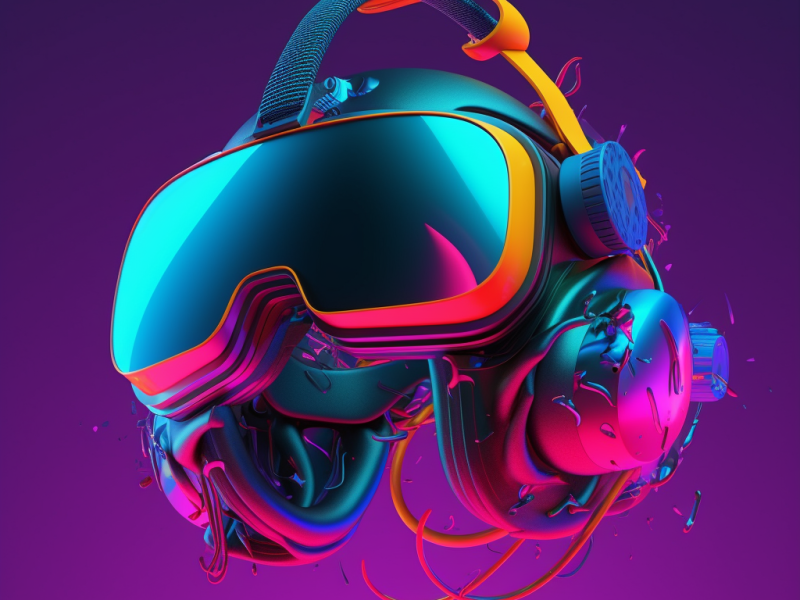
In the ever-evolving landscape of technology, the fusion of virtual reality (VR) with mobile applications has emerged as a groundbreaking trend. With this synergy, virtual tours, simulations, and entertainment have transcended traditional boundaries, placing unparalleled experiences at our fingertips. Let’s embark on an exploratory journey through the realms of VR integration and its profound impact on the mobile app universe.
The Rise of VR Headset Integration
The advent of VR into the mobile app ecosystem is a testament to the boundless potential of technology to redefine our sensory experiences. This emerging trend marks a pivotal moment where virtual reality shifts from being an exclusive domain of high-end gaming systems to becoming an accessible feature for the everyday smartphone user. By tethering VR to mobile applications, we are witnessing the democratization of virtual spaces, allowing people from all walks of life to engage with a world that was once the stuff of science fiction. This integration facilitates not just entertainment but also educational and professional applications, opening up new avenues for learning and remote collaboration. As developers and content creators continue to push the envelope, they are crafting more sophisticated and enriching virtual environments that can be enjoyed without the need for bulky equipment or expensive setups. This accessibility is instrumental in driving the widespread adoption of VR, making it a mainstream staple in our digital consumption habits. The integration’s success hinges on the seamless interplay between hardware and software, ensuring that users can effortlessly traverse the virtual landscape. As we continue to explore this integration’s vast potential, it’s clear that VR is not merely an enhancement of our current technology but a transformative force charting the course for future innovations.
The Art of Mobile App Development for VR
The process of creating mobile apps that are VR-compatible is a complex art form that marries intricate technical knowledge with an imaginative vision. Mobile app development for VR is an endeavor that pushes the boundaries of conventional app design, demanding developers to consider a myriad of nuanced elements such as spatial awareness, user immersion, and interaction within a three-dimensional space. This development sphere is characterized by a relentless pursuit of innovation, as developers must optimize for varying processing powers of mobile devices while ensuring the VR experience remains fluid and engaging. They must also navigate the intricacies of SDKs and APIs that are constantly evolving, all while keeping an eye on the latest trends in VR hardware. The goal is to deliver an application that not only functions seamlessly across different VR platforms but also captivates the user by providing an experience that is both stable and mesmerizing. This requires a deep understanding of the user’s physical interaction with the virtual world and the capacity to translate that into a digital experience that feels intuitive and responsive. As developers conquer these challenges, they unlock new possibilities for VR, leading to applications that go beyond gaming into realms like virtual travel, education, and even therapeutic uses, thus expanding the horizon of what mobile VR applications can achieve.
The Diverse World of VR
The diversity of virtual experiences made possible through VR is a rich and ever-expanding universe, offering a spectrum that caters to every imaginable interest and curiosity. The immersive nature of VR technology has paved the way for an astonishing array of applications, enabling users to transcend physical limitations and embark on experiences that range from the thrilling to the serene. In the realm of entertainment, VR brings to life interactive gaming environments where players become active participants in their adventures, crafting stories that respond to their every move. Educational applications harness the power of VR to simulate complex procedures for medical students or to recreate historical events for an interactive learning experience that resonates with users on a profound level. Virtual tours transport individuals to distant landmarks and natural wonders, providing a sense of presence that photographs or videos simply cannot match. Cultural events and performances can be enjoyed from the comfort of one’s home, offering front-row seats to anyone, regardless of their geographical location. These experiences are not only diversifying the types of content accessible in VR but are also challenging creators to invent new forms of storytelling and user engagement. As the technology advances, the expectation is for these experiences to become even more realistic and interactive, further blurring the lines between the virtual and the real, and expanding the potential for VR in shaping our perception of the world around us.
Market Trends and VR Headset Adoption
The market trends surrounding VR adoption paint a picture of a technology on the cusp of widespread acceptance and integration into our daily lives. Driven by a perfect storm of technological advancements, cost reductions, and a burgeoning content ecosystem, VR is experiencing unprecedented growth. This trend is mirrored in both consumer behavior and business investments, signaling a shift towards more interactive and immersive digital experiences. Consumers are increasingly seeking out VR for home entertainment, education, and social connection, especially as the technology becomes more affordable and user-friendly. Meanwhile, businesses are recognizing VR’s potential to revolutionize industries such as real estate, where virtual property tours are becoming the norm, and healthcare, where VR is used for patient therapy and surgeon training. As the market for VR expands, so does the variety of available devices, from standalone units to smartphone-powered headsets, each catering to different segments of the market. This trend is also fostering a competitive landscape where manufacturers and content creators are constantly innovating to capture the attention of a growing audience. The adoption wave is further bolstered by the support of major tech companies investing heavily in VR, solidifying its status as a key player in the future of technology and entertainment. Riding this wave, the VR industry is poised for significant transformation, with adoption rates indicating a future where virtual experiences become as commonplace as using a smartphone.
VR Integration Challenges
The journey of integrating VR into mobile applications is fraught with a myriad of technical challenges, akin to navigating a complex labyrinth where each turn presents a new puzzle to solve. Developers face the daunting task of ensuring VR experiences are not only compelling but also technically robust, requiring a delicate balance between high-quality visuals and the processing limitations of mobile devices. One of the most significant hurdles is achieving and maintaining a high frame rate, which is crucial for preventing the motion sickness often associated with VR. This involves meticulous optimization of graphics and computational efficiency to deliver a smooth and responsive experience. Battery life presents another significant concern, as VR applications are notoriously power-hungry, necessitating innovative approaches to energy management. Additionally, the diverse ecosystem of VR, each with varying specifications and capabilities, challenges developers to create versatile solutions that can adapt to a wide range of hardware. These technical intricacies demand not only a deep understanding of the technological landscape but also the foresight to anticipate and adapt to emerging trends and standards. As developers navigate this technical maze, their breakthroughs and innovations contribute to a more robust and dynamic VR platform, ultimately enhancing the user experience and expanding the boundaries of what is possible within the realm of mobile VR.
User Experience in VR Apps
Designing user experiences (UX) for VR apps is an intricate endeavor that goes beyond aesthetics and functionality, venturing into the realm of psychological engagement and intuitive design. As architects of virtual worlds, UX designers must create environments that not only captivate users visually but also cater to the cognitive and perceptual nuances of human interaction with a three-dimensional space. This task involves a deep understanding of how users perceive and process virtual environments, ensuring that every element, from the layout to the control schemes, aligns with natural human behavior. Designers must also prioritize comfort, minimizing the potential for motion sickness by optimizing movement mechanics and visual stability. The goal is to foster a sense of presence, the feeling that users are genuinely ‘inside’ the virtual experience, which is the hallmark of successful VR immersion. Crafting these experiences also requires attention to accessibility, ensuring that VR apps are inclusive and can be enjoyed by a broad spectrum of users, regardless of their physical abilities. As VR technology evolves, so too must the approaches to UX design, with designers constantly experimenting with new ways to interact with virtual content, whether through gaze-based controls, gesture recognition, or voice commands. In designing for the mind, UX professionals are not just creating apps; they’re sculpting the very essence of virtual experiences that resonate on a personal and emotional level with users.
The Future of VR Technology
The future of VR technology stretches out like an uncharted digital landscape brimming with potential and surprises. As we glimpse over the horizon, we see a sector that is not just growing, but evolving in ways that promise to redefine our interaction with technology. The integration of augmented reality (AR) with VR, commonly referred to as mixed reality, is blurring the lines between the physical and virtual worlds, creating a hybrid space where users can interact with digital objects as if they were truly part of their environment. Advances in haptic feedback technology are set to revolutionize the sensory dimension of VR, enabling users to ‘feel’ virtual objects, adding a layer of realism that was previously unattainable. AI is another frontier being explored within VR, with the potential to personalize experiences to unprecedented degrees, adapting virtual environments to user preferences and behaviors. Furthermore, the prospect of wireless VR and cloud-based VR services suggests a future where high-quality VR experiences can be accessed anytime, anywhere, without the constraints of hardware. As these technologies converge, they are paving the way for a future where VR is omnipresent in fields ranging from entertainment and education to telemedicine and beyond. The horizon for VR technology is vast and promises a journey filled with innovation, immersion, and connectivity that will transform our digital experiences and expand the boundaries of what we consider possible.
VR integration into mobile applications marks a transformative era in digital interactivity, where immersive virtual experiences are becoming more accessible than ever before. This integration signifies a major leap forward, as VR transcends the realm of niche gaming into a versatile tool for entertainment, education, and beyond. With the technology becoming more user-friendly and cost-effective, we are witnessing a surge in adoption across various sectors. However, as the demand grows, so do the challenges, pushing developers and designers to innovate and overcome technical and user experience hurdles. Looking ahead, the future of VR technology is poised for a vibrant evolution, with advancements in AR, haptic feedback, AI, and wireless connectivity set to elevate the immersive experience to new heights. The potential applications for VR are as limitless as the imagination, promising to reshape our digital interactions and open up a world of possibilities that will influence generations to come.
We’re eager to hear from you and discuss how we can bring your mobile app into the virtual age. With VR and our expertise, the possibilities are limitless. Connect with us now and take the first step into a new era of mobile applications.